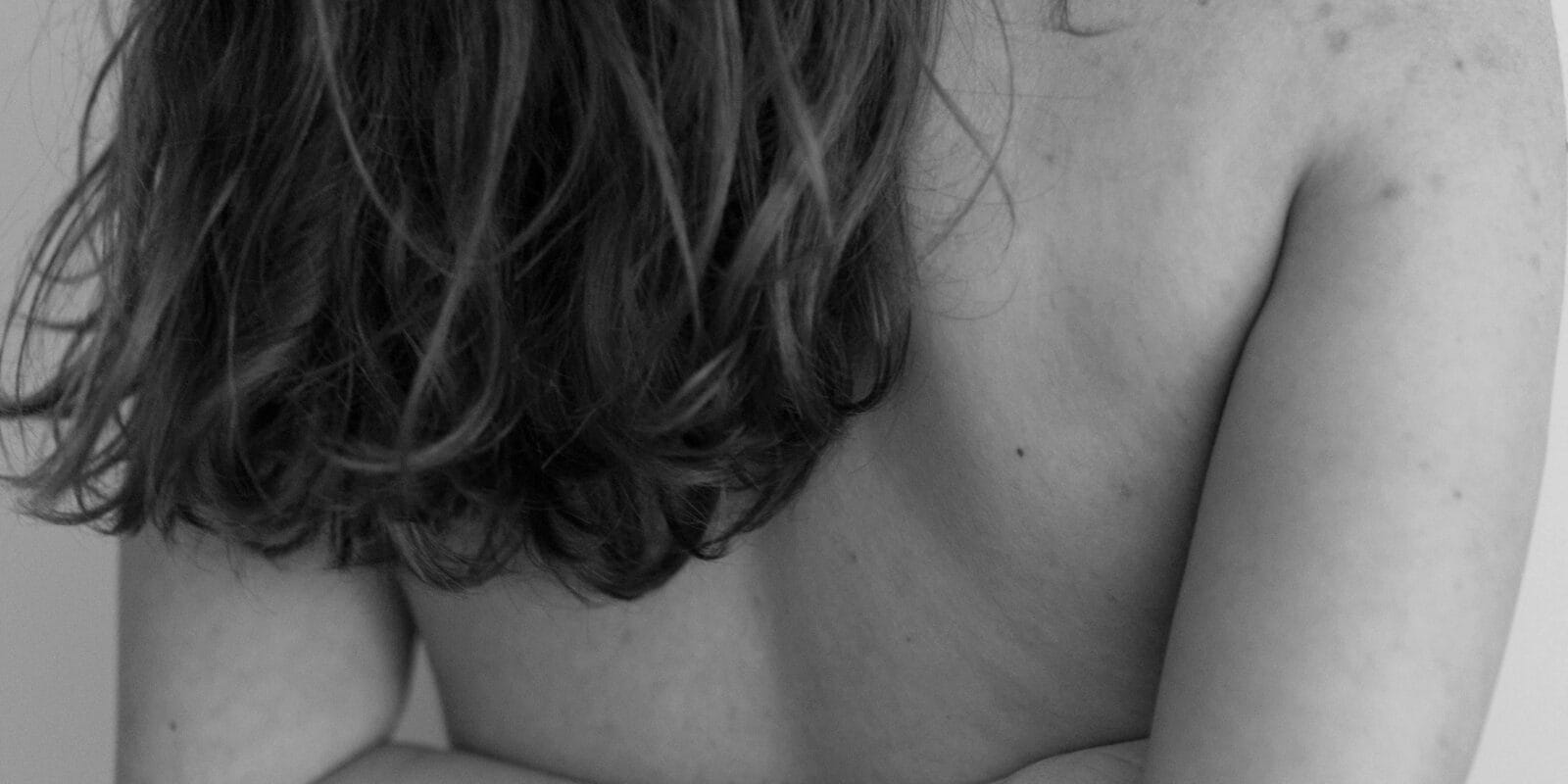

We often think about hair in terms of how it looks. How it falls, how it frames the face, how it is read by others. Yet hair has always been more than appearance. Long before it became something to style or manage, it became something the body responded to, a quiet meeting point between sensation, memory and care.
Sometimes, changing one’s hair is not about appearance at all. Cutting it can feel like a declaration, a release, or an inner turning point. Allowing to grow can speak of patience, acceptance, or a desire to move slowly through the world. Positioned close to the head and the brain, hair stays in constant conversation with the body’s sense of safety and threat. It responds instantly to breeze, vibration and proximity, long before thoughts step in. Hair becomes a quiet threshold where inner experience meets the world outside.

How Does Hair Register What the Body Lives Through?
→ What Is Hair Really Responding To?
Hair exists in constant conversation with the environment. A single strand can irritate enough to pull us out of thought and into sensation. A gentle movement of air can be felt immediately. This responsiveness is not accidental. It reflects how closely the scalp and the head are linked to awareness and alertness. Though hair grows at the body’s edge, it remains in steady dialogue with the centre. Over time, it carries the imprint of what the body has been exposed to: rest and strain, nourishment and depletion, safety and vigilance. Genetics may offer a starting point, but the environment shapes what unfolds. Hair becomes a quiet, ongoing reflection of internal states, revealing change slowly rather than all at once.
How Does Touch Teach the Nervous System to Settle?
→ Where Do We First Learn Safety?
Touch around the head holds a particular intimacy, often because of early experiences that taught the nervous system how to settle. This learning begins even before memory. When an infant is born, doctors intentionally place the baby on the mother’s chest, skin to skin, not to stimulate but to soothe. The newborn hears a sound it already knows, the mother’s heartbeat, one of the most familiar sensations from inside the womb. Warmth, scent, breath and sound come together to signal safety before language ever arrives.
These core sensory memories shape our sense of safety and self. For many, the memories of hair being oiled, combed, or gently massaged are more than just nostalgia. We have a lot to thank our Moms and grandmoms, who took the time to slow down and pay meaningful attention to us when we were little. The rhythm of the hands, shaped by repetition, familiar pressure, and predictable pacing, formed our sense of safe touch. Beyond grooming, they offered co-regulation, teaching the body to relax in the presence of another.

What made these moments regulating was not just technique, but intention. Care is offered without demand. Safety was returned to again and again, while attention was not rushed, but was a grounding force. Through this consistency, the body learned that closeness could feel contained rather than overwhelming. That it was possible to soften in the presence of another without needing to perform or protect.
Touch exists on a continuum, beginning with holding and rocking, and gradually unfolding into more nuanced and complex experiences of contact. Context matters deeply too. The same gesture can feel comforting or unsettling depending on who is offering it and within what relational bounds. Touching the hair is never just touch; it carries history, intention and meaning, all of which the body has coded and decoded over time.
What Do Safe Boundaries Feel Like in the Body?
→ How Does the Body Know When It’s Safe?
Hair is a great example of a boundary that protects from direct impact. It is soft enough to dampen impact, and at the same time, offers sensory input in case of any perceived danger. Boundaries in real life are not so much about rules as they are about knowing yourself, speaking up for that knowing, and walking away when it isn’t honoured. It is not about changing people but more about what you want to allow in, tolerate, and create space for. After all, what we tolerate often has a tendency to dominate in our lives. This is not because closeness is not welcome, but because choice has returned to not just the mind but also the body.
Safety in the body shows up subtly, breath stays steady, muscles do not brace – this signals a more inviting approach to touch and closeness. When these signals are present, closeness can feel grounding rather than consuming. It lets the body remain intact while being near another. Allowing someone close enough to either bless you by the laying of hands on your head or to feel someone’s breath close to your hair – both require connection, predictability and safety to go hand in hand. Again, relational context matters. The same experience can have a different meaning in a threatening context or when safety is compromised.

Why Does Hair Change When We Do?
→ Why Do We Turn to Hair at Moments of Shift?
Most people understand, almost instinctively, that cutting one’s hair can mark an inner shift. Sometimes it follows grief, sometimes exhaustion, sometimes it arrives before something difficult, as if preparing the body for what lies ahead. In these moments, hair becomes a companion to change. Not the cause of transformation, but a visible participant in it. Whether the shift feels like gathering strength or stepping into a new sense of self, hair often moves alongside the inner process, offering a way to mark what words cannot yet hold. It is also willing to sacrifice in case the body needs to go into survival mode. So, pay careful attention to your hair; it is always communicating.
How Can Hair Rituals Become a Signature of Self-Possession?
When hair-care is approached as a ritual rather than maintenance, it becomes a way of listening inward. Here are 6 ways to use this in Daily Life:
1. Turn wash-day into a ritual: Slow your movements. Massage your scalp with warm oil or cleanser for two extra minutes, focusing on pressure and rhythm rather than speed.
2. Use warmth deliberately: Wrap your head in a warm towel for a few moments after applying a mask — it signals comfort and helps the body relax.
3. Repeat a familiar routine: Do the same steps in the same order. Consistency creates safety.
4. Stay present: Put your phone away. Pay attention to touch, scent and temperature while you care for your hair.
5. Let someone else take over sometimes: Allow a professional or loved one to massage your scalp — and resist the urge to rush it.
6. Notice how you feel afterwards, not just how you look: Ask yourself: Do I feel calmer? More settled? That’s part of the result.
Listen to your body, listen to your hair, and that’s a magical tool to align your body, mind and spirit!
Also Read:
I tried the viral Korean hair spa at Lakme Salon
5 proven tips for hair growth
7 best champi oils for strong and healthy hair