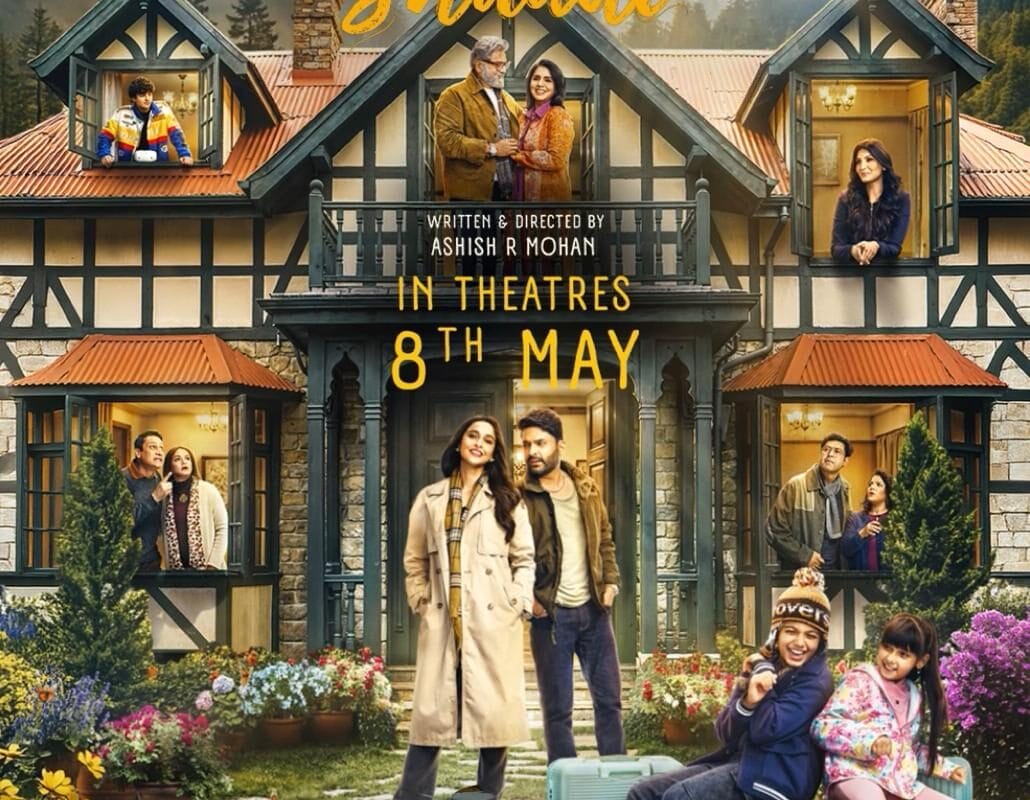
In Dadi Ki Shaadi, the grandmother isn’t in the background. She’s the full frame
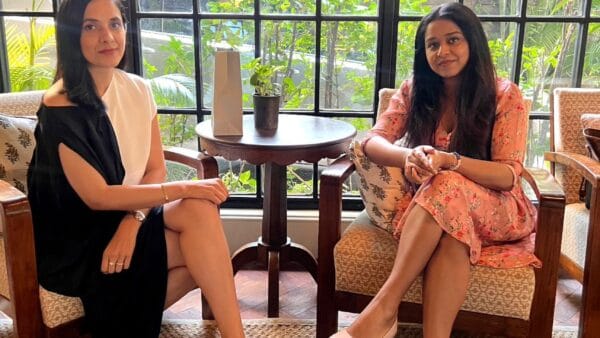
The first time I met Komal Shahani, she didn’t begin with introducing herself. She began with showcasing a moodboard. She placed it on the table and started speaking – not about outfits, but about a world. Hill winters, handwoven woollens, and women who dressed with intent long before anyone called it aesthetic. It felt less like a briefing and more like being invited into something that had already been lived.
That instinct is what defines her work. Known for shaping the visual identities of several actors including Akshay Kumar, and working across films with South stars Vijay and Vikram, Komal doesn’t just style. She constructs presence. With Dadi Ki Shaadi, starring Neetu Kapoor and Kapil Sharma, that presence shifts focus. The grandmother isn’t softened, sidelined, or sentimentalised. She’s centred and seen. And quietly, the film leaves you with a thought you can’t shake off: what if main character energy had nothing to do with age, and everything to do with how you occupy a frame?

1. In Dadi Ki Shaadi, the grandmother feels like the main character. What was the intent behind creating the role in this manner?

I wanted her presence to feel timeless and iconic. Usually, women of a certain age are dressed to fade into the background by being given soft colours and quieter fabrics, almost like they’re meant to disappear. I wanted to flip that. I treated her as the visual heartbeat of every frame. Through structured silhouettes and heirloom layers, she becomes the anchor. She doesn’t just exist in the story – she owns it.
2. When you entered this film, what was the first visual instinct you trusted—and what did you consciously hold back?
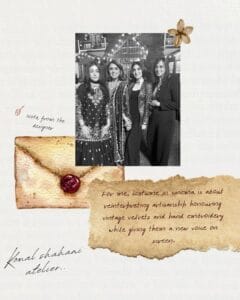
When I stepped into this film, I didn’t open a brief. I opened a trunkful of stories. Of hill winters and silk occasions, of families held together through texture, colour, and the warmth of a handwoven woollen shawl. This collection is my love letter to all of that. I built it around one guiding truth, that North Indian Himachali heritage is one of the most under-celebrated wells of fashion-inspiration we have. The woollens, the weaves, the embroidery that takes days aren’t trends, they’re responsibilities. I wanted the clothes to feel inherited, not curated. What I held back was the noise, the newness, the over-styling of modern weddings. I didn’t want this to feel consciously designed.
3. You don’t just dress people, you build characters. What is the one detail you look for that tells you you’ve got it right?
It’s always a small moment – the way a sleeve is rolled up, the way a shawl falls when someone laughs. When the actor stops performing and just is, that’s when I know. If the clothes feel like they’ve lived with the character for years, I’ve done my job.
4. What is the one thing all strong screen identities get right that most people miss?
Comfort. Everything starts there. If an actor feels right in what they’re wearing, everything shifts –their body language, their presence, their performance. From there, it’s about clarity. A silhouette, a layering language, a palette that belongs only to that character. We’re not just dressing actors, we’re building something people remember without knowing why.
5. In this film, you’ve created someone who feels current, not nostalgic. What did you refuse to do while styling Neetu Kapoor?
With Neetu ma’am, the easiest thing would have been to lean into nostalgia, but I didn’t want that. I leaned into what people call “grandma-core” globally, but gave it an Indian soul. We took vintage textiles and reimagined them into structured, modern pieces. She feels current and sharp because grace doesn’t age, it deepens. She isn’t a relic. She’s the reference.
6. Weddings today often look overdone. What are the easiest ways people dilute their own presence when they dress up?
When the outfit becomes louder than the person, that’s the mistake. Too much glitter, too many trends, too much trying. The result is noise, and somewhere in that, the person disappears. Style should bring you forward, not hide you behind it.
7. When it comes to Indian men, where do they get it wrong most often and what would you change immediately?
They treat traditional wear like a costume. I’d change that first. Bring back tailoring and structure. Move away from perfectly matched sets and start playing with texture, layering, contrast. The most powerful looks are the ones that feel effortless even when they’re not.
8. Not everyone has access to a stylist—so how can someone start thinking about their own style in a more intentional, character-led way?
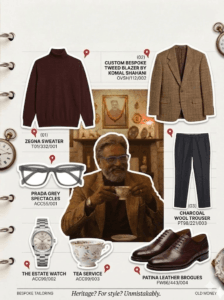
Start with one piece—something that feels like you. A jacket, a shawl, a fabric. Build around that. Don’t buy looks, buy pieces that feel like home. Your wardrobe should read like a biography, not a trend report.
9. As someone who builds looks at scale, what are the non-negotiables every man and every woman should have in their wardrobe – the pieces that always hold the look together?
Fit, fabric, feeling. Everything else comes later. For her, a reimagined heirloom jacket – something that carries memory but feels current. For him, a well-tailored jacket in a strong textile. But above all, authenticity. Because nothing looks better than something that feels true.