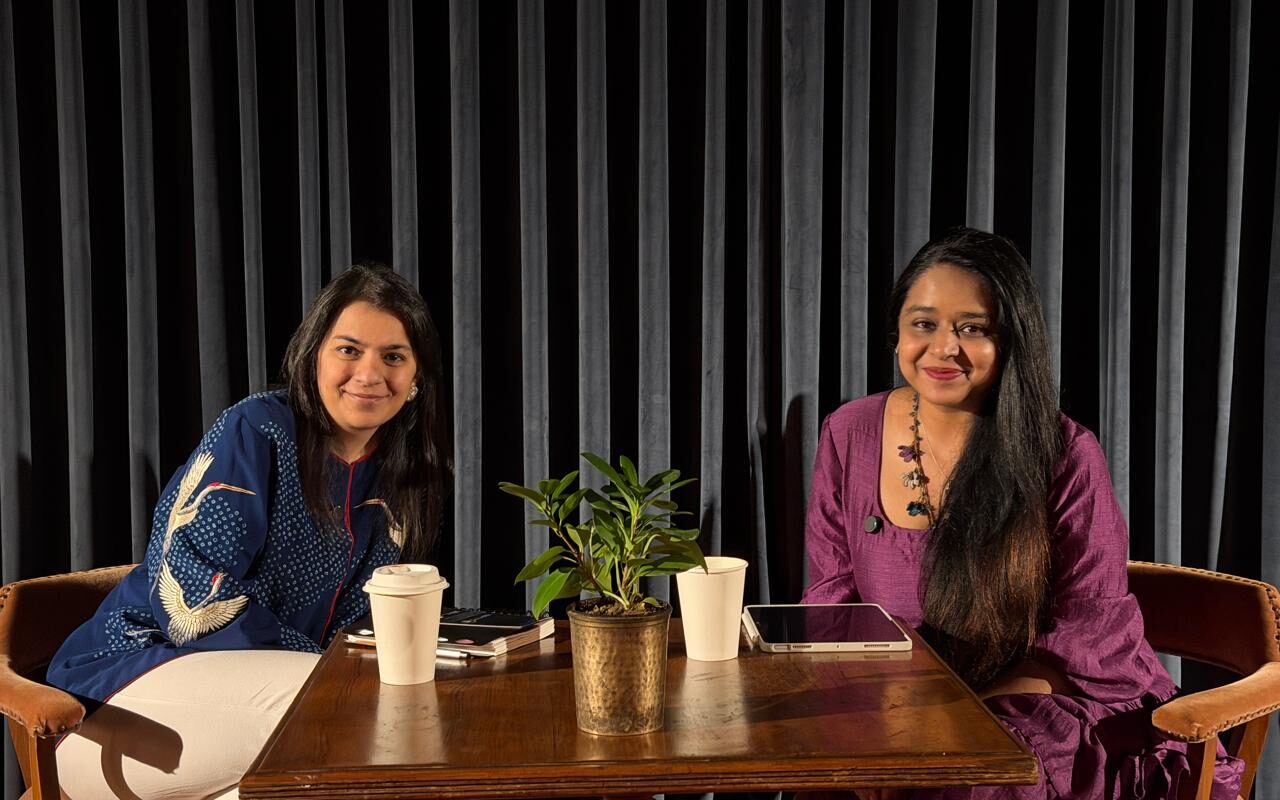
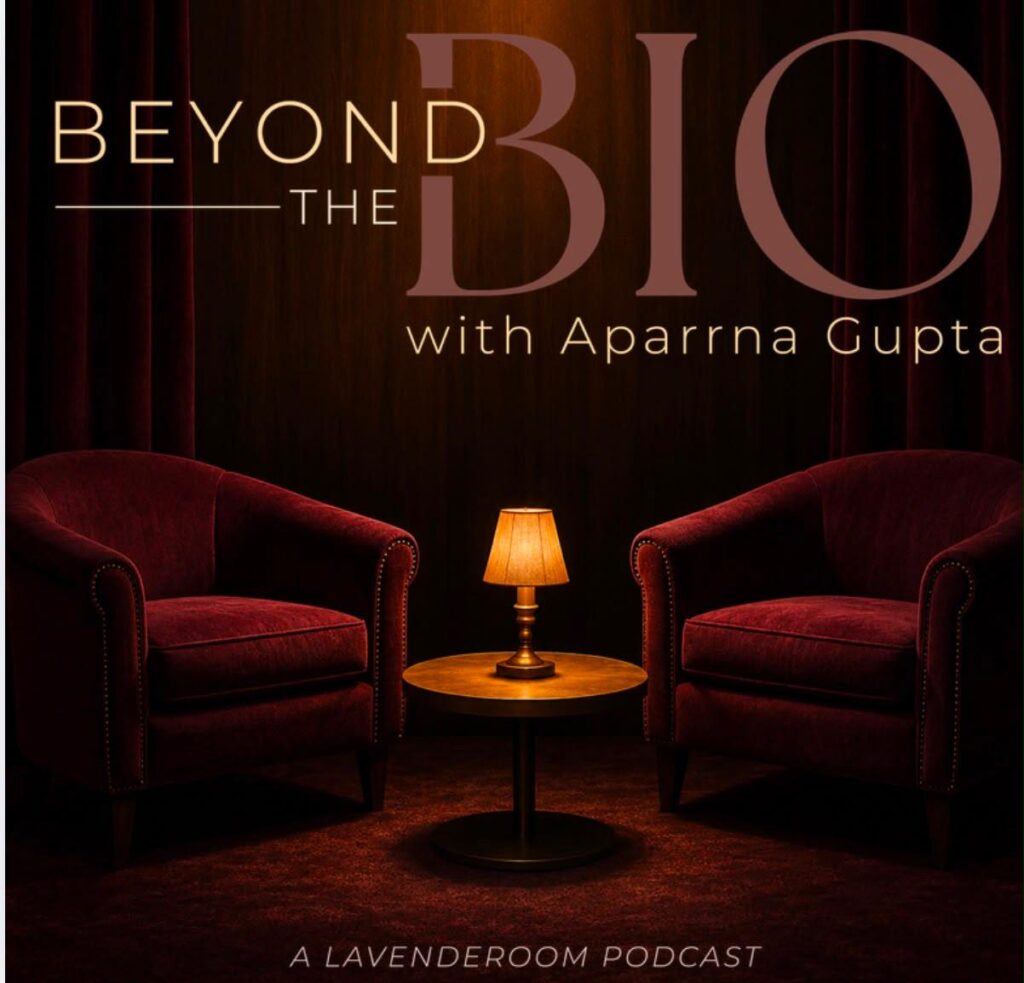
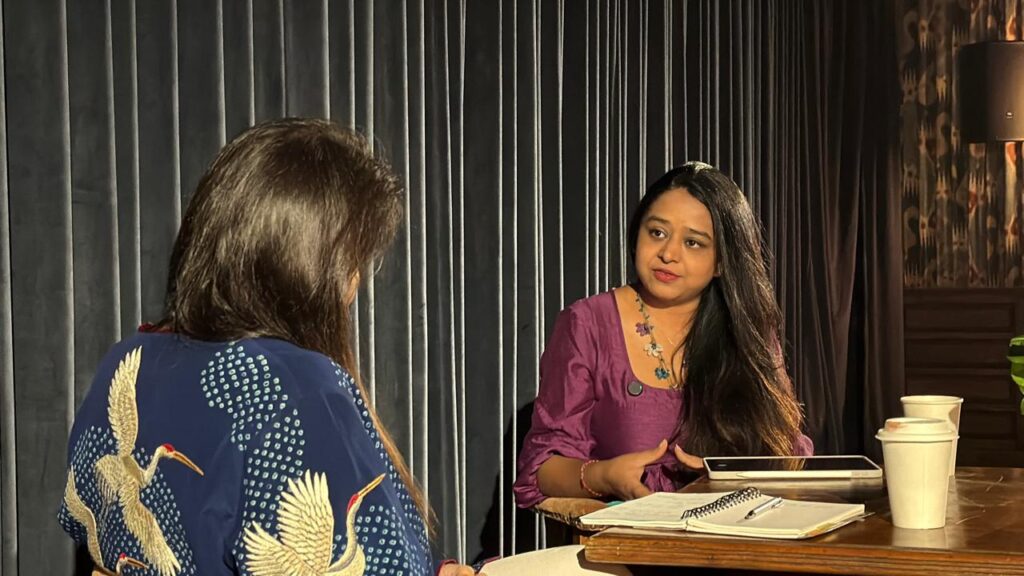
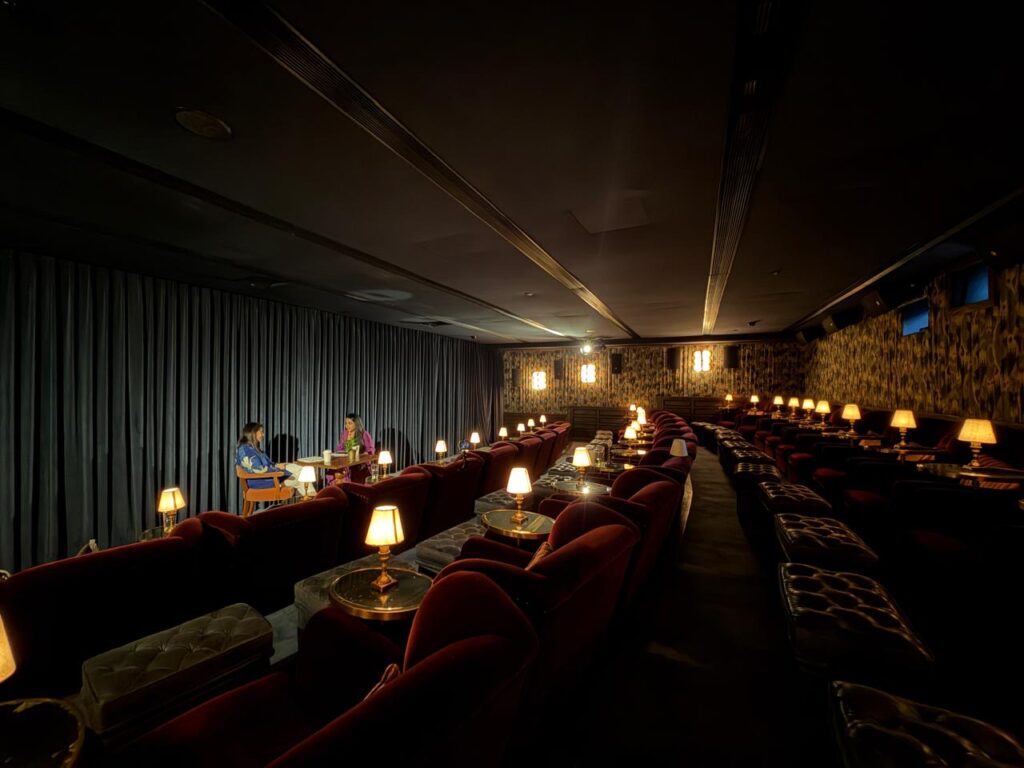
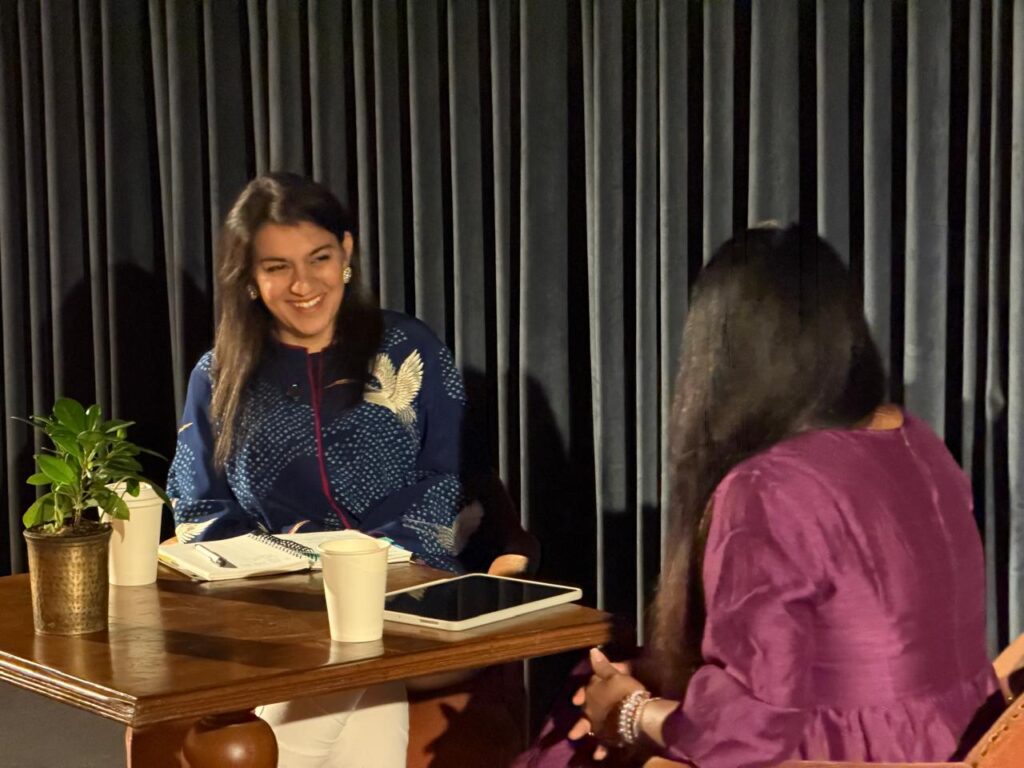
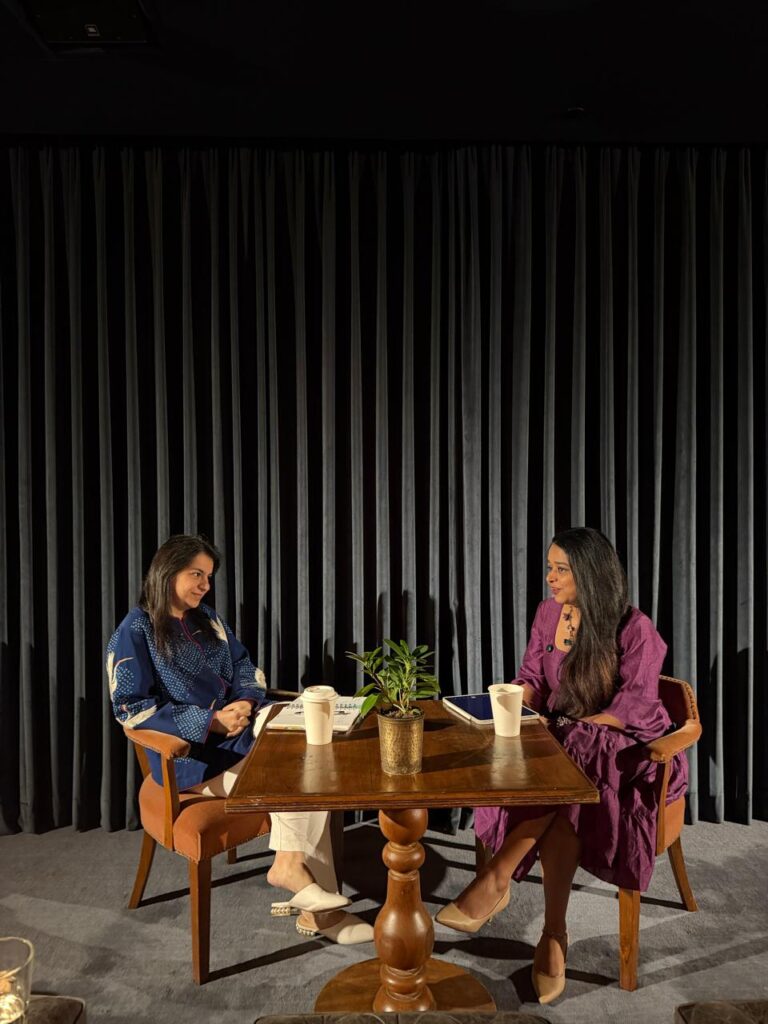
Some conversations you wish someone had recorded. With Samana Tejani, that happens often enough that we finally pressed record. Samana is Director of Operations at Gits Food Products, and the kind of person who asks as many questions as she answers. Usually, I’m the one asking. This time, it went both ways. What came out of it became the first episode of Beyond the Bio, our podcast on leadership, rituals and the lives we build. At Lavenderoom, we’ve always believed beauty doesn’t exist in isolation, and this conversation is about everything underneath it: self-respect, saying no, the people who believed in us, and the rituals that get us through the week.
On Beauty, Inside Out
Aparrna Gupta: When we talk about Lavenderoom, beauty is naturally part of it. But I don’t believe beauty can exist in isolation. It’s a holistic part of who we are.
Samana Tejani: Completely agree. You could strip away the outer layer of beauty, but what’s inside will always show up.
AG: We talk a lot about self-love as the basis of feeling beautiful, but really it comes down to self-respect. How do you hold boundaries without becoming a pushover?
ST: Honestly, I still struggle with that. An advisor once told me, “You stay quiet because you want to avoid conflict, but there’ll come a day when you’re sick of it, and you’ll finally speak up, and the room won’t be ready for it.” Not every battle needs to be won or lost in the same conversation. But you should at least say, “I’m letting this go, but I want you to know I’m not comfortable with it.” That one sentence matters.
AG: That’s such an important skill, especially for people like us who default to avoiding conflict. It took me a while, but a few years ago I decided I wouldn’t give unsolicited advice to anyone I wasn’t related to by blood or contract.
ST: It’s rewiring your brain to be okay in situations that don’t come naturally. And if you have good people around you, they’ll notice when you’re letting too much go.
On Finding Your Tribe
AG: You’re very comfortable asking for help. But that comes from a place of privilege. What would you say to someone who doesn’t have that?
ST: You’re right, it is a privileged position. Then the real work is finding your tribe, the people you can go to without judgment, and finding a mentor. People who’ve made it often want to give back. Surround yourself with people better than you. And I’ve noticed how real your relationships are. People genuinely trust you.
AG: I try to make sure any introduction I make is a win-win, not just for me. And I’m honestly not great at small talk. If you say hi, I’ll skip straight to a deep question.
ST: My purpose in life is to be a storyteller, and every interaction I’ve had with you has essentially been storytelling at its best.
On A Diagnosis That Came Late
AG: Tell us about the learning disability.
ST: I struggled with writing in school. Not with understanding, not with oral work, just with putting answers down on paper. There just wasn’t enough awareness at the time for any teacher to consider it. Later, a teacher at Purdue noticed something was off and pointed me toward help. The specialist looked at a sentence I’d written and told me my “writing age” was fourteen. I was twenty-four or twenty-five. He had one condition before diagnosing me: that I wouldn’t let it become a label I disappeared into. I just wanted to understand what this was, not carry it as a wound.
Years later, I found a remedial teacher and saw her almost every weekday for close to a year and a half. She taught me mind-mapping. She told me, “Your spellings are yours. Nobody needs to see how they look in your notebook.” Those two years changed my life. If your child is struggling, please get them help. There’s nothing shameful about needing it.
AG: Where does that resilience come from?
ST: My father never once questioned my ability to do anything. I once called him from boarding school wanting to quit. I was being picked on. He said, “Whoever is chasing you out has already won if you come home. But if you still feel the same way on Monday morning, I’ll come get you, no questions asked.” I knew he meant it, which somehow gave me the security to stay.
On Fragrance, And Feeling Secure
ST: Tell us about your journey. How did you find fragrance?
AG: I started at a lifestyle and entertainment publication, doing concerts, celebrity interviews, parties, but I always wanted a niche. I specialised in beauty at the Times of India for five or six years, when it was still just a few pages in a magazine. Fragrance became my super-niche. It’s artistic in a way other categories aren’t. A fine fragrance isn’t judgmental. It’s not there to make you feel inadequate, only to make your life a little better.
ST: And Aparrna Writes Beauty?
AG: Beauty has traditionally been used to make people feel insecure. Aparrna Writes Beauty started with a fairly simple, almost naive idea: what if it made people feel secure instead? Lavenderoom is bigger. It brings many points of view together, a space for expert-led guidance and a bridge between digital and real-world experiences.
ST: And you, as a mother?
AG: I had my daughter early in life. I’ve mostly been learning on the job. She’s a teenager, so she says plenty of things that could flatten anyone’s ego in a heartbeat. But she once told me, “Whoever comes into my life has very large shoes to fill, because who could love me the way you do?” I don’t think parents give themselves enough credit for moments like that.
ST: I’ve never really worn much jewellery myself. Growing up, there was no focus on looking a certain way. Now I do it because I enjoy it, not because I need it.
AG: That’s exactly the distinction I try to make. There’s corrective beauty and there’s expressive beauty. My daughter once had a full face of makeup on and I asked where she was headed. She said, “I don’t do makeup for other people. I do it for myself.”
On Rituals, And Managing Not Balancing
ST: How do you make sure your energy isn’t depleted by the end of the week?
AG: When I’m frustrated, I journal. My diary is split into two halves: one side is resentments; the other, folded over, is gratitude, and that side doesn’t need full sentences. And at the end of the day, I consciously say, “Wherever I’ve given my energy, I take it back. Whoever has given me their energy, I return it.”
ST: And how do you manage your time?
AG: I get up at 4:30 and don’t step out of my own headspace until around 8:30. Those four hours are for deep thinking, and I make myself inaccessible. I think the word we should be using isn’t “balance,” it’s “manage.” Someone once told me “balance” makes you picture a girl on a tightrope, about to fall one way or the other.
ST: One thing I’ll say: you’re always on the back foot about how good you are.
AG: I do feel shy about it. Early in my career, I refused to go on camera, and here I am now. A business coach once told me, “The only thing you need to do, Aparrna, is get out of your own way. Nobody blocks you as much as you block yourself.”
ST: I think that’s especially true for women. In appraisals, women tend to talk about what they need to improve, and men lead with their accomplishments.
AG: We shove our own wins under the carpet. Three words you’d take away from this conversation?
ST: Inspiring, compassionate, and guidance.
AG: Main character energy, which I’ve learned from you. And finding your tribe.
ST: Finding your tribe: being able to have a conversation with someone and have it simply flow.
This was one of those conversations. If anything here resonated, carry it with you today and let it sit.
Watch the rest of the conversation on Beyond the Bio, Episode 1, on the Lavenderoom YouTube channel here.
Also read:
In-Chair Skin Treatments Every Bride Should Know About
Decoding the hype behind HydraFacial MD
Glow Hour: Where Skin Science Meets Soulful Self-Care