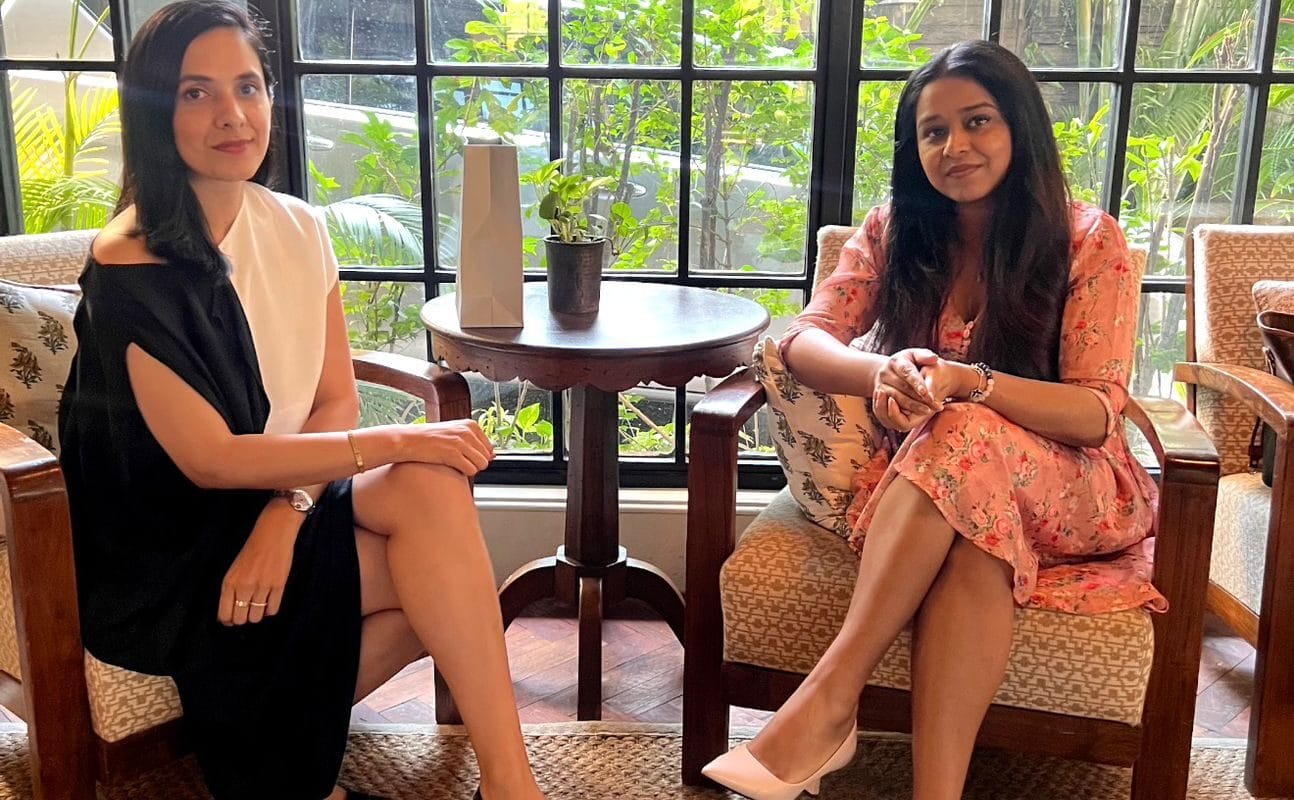
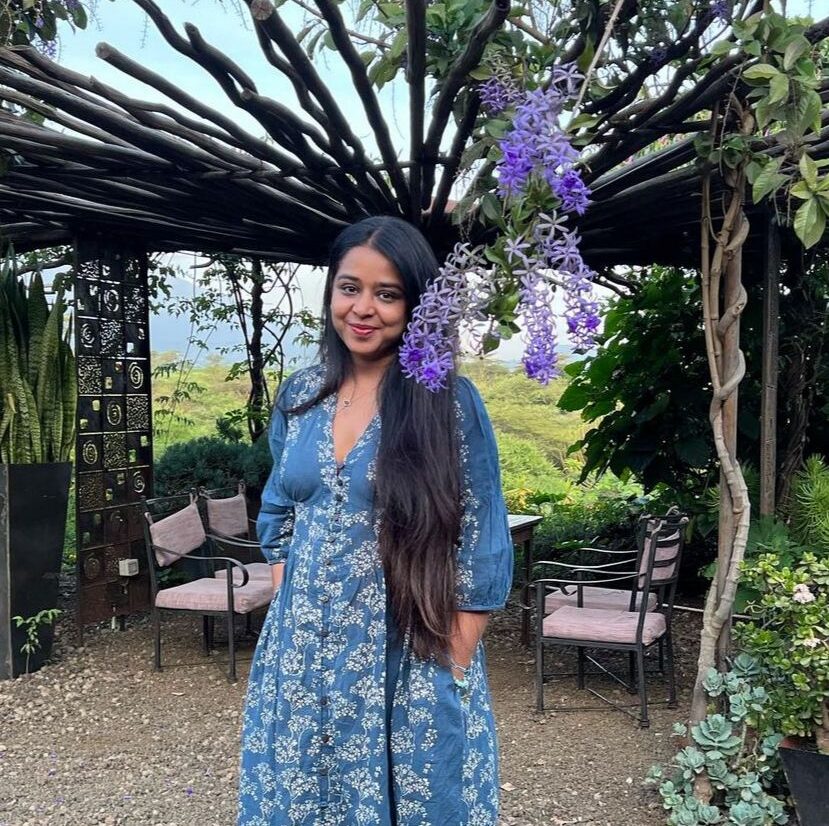
Some founders build brands. Ankita is building a memory you didn’t know you were missing. Param Sara, her fragrance house, is her decade-long love letter to the East — not a single geography, but a shared sensibility that runs from a childhood in Chandigarh through the ritual and restraint she absorbed over ten years in Shanghai. She left a career in finance, and later fashion, to arrive at scent almost inevitably: it was the one language precise enough to hold everything she’d lived through. Every bottle carries a name, an ingredient story, a small card tucked inside — details that ask you to slow down before you even smell the perfume. Param Sara has already found its audience in Shanghai, and Ankita is now carrying it, quietly and deliberately, toward the rest of the world. I sat down with her to talk about liberty, ritual, distance, and what it really means to build beauty inside out.

Q| We met at Beauty World Dubai, and you found me — what made you walk up?
I’d been following your work in the beauty space for a while, and I was always drawn to how you shared your knowledge: intentional, fact-based, elegant, never performative. So when our paths actually crossed, it felt like too beautiful a coincidence to let pass. And here we are, still connected.
Q| When you showed me your range in Bombay, the storytelling struck me — the naming, the ingredients, even the small cards inside the box. Where does a perfume’s name actually begin — a memory, a ritual, or the scent itself?
I was born and raised in India, and I spent almost a decade in China, and honestly, there’s one thing I keep coming back to in almost every decision I make for Param Sara: how much the East connects us all. India will always be where Param Sara starts, and where its heart lives. But living across cultures showed me that same reverence for ritual and scent runs through the wider East too. And that shared sensibility is really the undercurrent of Param Sara.
Q| You left finance for fragrance, from Shanghai, a decade removed from Chandigarh. What was the real moment that made that leap necessary, not just tempting?
The leap wasn’t one dramatic moment, it built over years of living across different cultures, watching the rituals differ but the intention stay identical. What made it necessary, rather than tempting, was realising how much space there was for a genuinely Eastern voice in fragrance, one that comes from within, not from a distance. My path had already moved through finance, then fashion structure, then storytelling, and fragrance was simply where that translation had to happen.
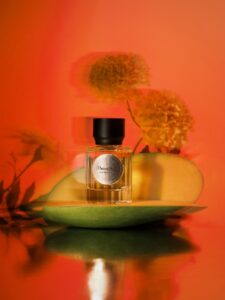
Q| You once asked me a few questions that led me to realise liberty is one of the greatest values of my life. What does liberty mean to you, after a decade of building a life so far from where you started?
Freedom, to me, is evolution, it’s not a state you arrive at, it’s the courage to keep walking through change. It’s staying in motion through the unknown, when there’s no map and no guarantee it works out. It’s the rejection, the ideas that didn’t land, the versions of the plan that failed, and choosing not to fall back into what was safe. So freedom, for me, is simply the refusal to stop becoming.
Q| You’ve called your collaborators “culturally-fluid.” How do you brief someone who isn’t Indian on an Indian ritual without losing what makes it true?
I brief the sensibility, not the aesthetic, I’m just expressing philosophies I’ve consciously lived inside, through fragrance. When I say ‘Eastern philosophies,’ I’m honouring exactly where that wisdom comes from, India, first and always, while recognising that the same values — presence, purity, connection — show up across the wider East too.
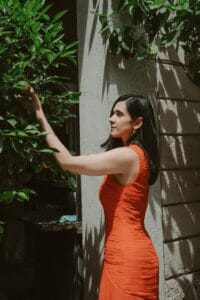
Q| A decade in Shanghai, looking back at India from a distance — has that sharpened your relationship with Indian scent and memory, or made it more selective?
Distance sharpened it more than it made me selective. Certain memories became almost unbearably vivid once I couldn’t just walk into them any more. Not being able to access it physically made me chase it more deliberately through scent instead. If anything, Shanghai taught me which memories mattered most to me, not by letting go, but by understanding it more precisely.
Q| Before someone even smells a Param Sara perfume, they read the card inside the box. What do you want them to feel first? I want them to feel curiosity before they feel anything else, a pause, before the scent even reaches them. Each perfume is a story built around the cycles of life and the sacred ingredients I grew up with, because I believe fragrance can move us, awaken us, connect us to something beyond ourselves.
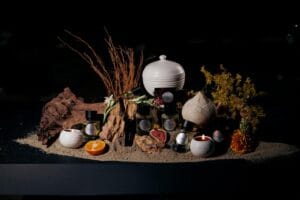
Q| If you had to describe Param Sara in a single line, what would it be?
A space where time slows, where scent becomes a bridge between past and present, the seen and the unseen.
Q| Lavenderoom is built around one belief — beauty inside out. What does that philosophy mean to you, and where do you see it showing up in your own work with fragrance?
It lines up exactly with what Param Sara is built on, that outer grace comes from inner wholeness, not ornament. For me, that shows up on two levels: spiritually, the scent speaks to the wearer’s inner sense of self before it speaks to anyone else’s perception. Practically, it’s in how we work — honouring raw materials, choosing sustainable production, refusing empty vanity. The fragrance doesn’t mask who you are, it’s a bridge to who you already are underneath.

Talking to Ankita, you realise Param Sara was never really about perfume — it’s about translation. She has spent a decade turning distance into devotion, and ritual into something you can wear. As she carries the brand from Shanghai toward a global audience, what stays constant is the same quiet conviction she started with: that beauty, real beauty, is always built from the inside out. I have no doubt the world is about to catch up to what she already knows.
Also Read:
Discipline, Innovation and Aminu: Prachi Bhandari on Building Steadily and Building Right
From Legacy to Launch: Sharvi Mehta on Fragrance, Business and New Beginning
Scent, Story and the Modern Ittar: Esha Tiwari on Disrupting Indian Perfumery with Kastoor