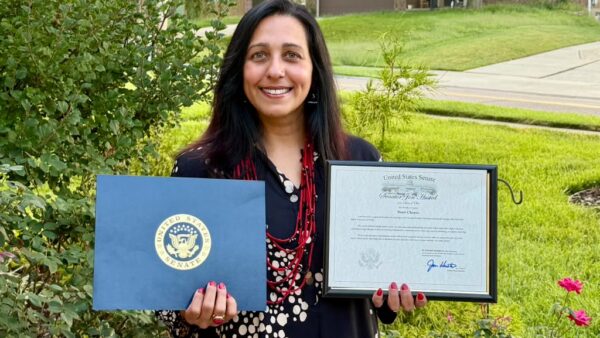

The Lavenderoom Conversation Series brings together individuals whose work is shaping the way we think, build and live. In every conversation, we go beyond titles and achievements to understand the experiences, beliefs and perspectives that have defined their journey.
For this edition, we are joined by Prachi Bhandari — co-founder, alongside her husband Aman Mohunta, of Aminu. I first connected with Prachi on a call, and later at her lab, and something about that early meeting stayed with me. Prachi is one of those rare founders I don’t just support — I love, deeply and personally. What draws me to her is her refusal to compromise: if a formulation or ingredient isn’t right, she will let go of a trending moment entirely rather than rush a product out before it’s ready. In an industry that often rewards speed over substance, that kind of discipline is rare. She is also perpetually in learning mode — travelling to international conferences around the world and bringing that knowledge home to Aminu.
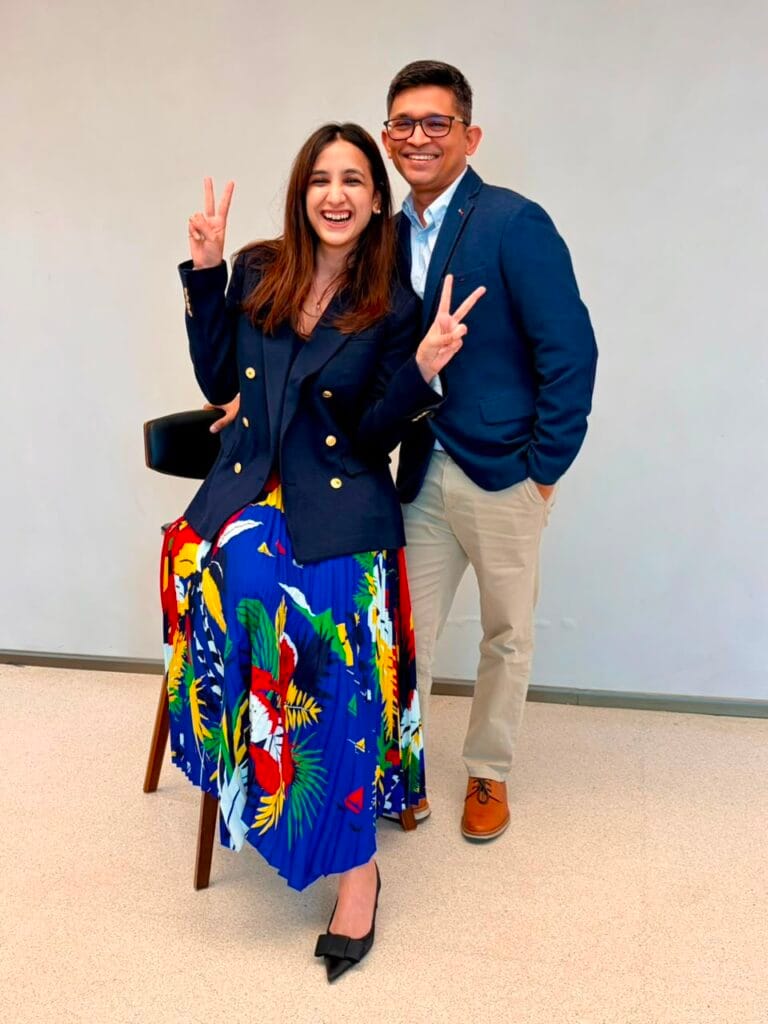
But what moves me most about Prachi isn’t just her rigour — it’s her generosity. She is the first to champion other founders, her words, and also with her resources and her network. And beneath that generosity sits a resilience she doesn’t advertise: Prachi lost her father while she was still in school, and has spoken to me about how quickly life changed after — money that had been carefully saved suddenly gone, plans reshaped almost overnight. What she carries from that experience isn’t bitterness but a quiet, steady belief that life can always begin again. On the days I’ve doubted myself in business, it’s her voice I return to.
1. Aminu is known for never rushing a formulation until it’s exactly right, even at the cost of trends. Where does that discipline come from, and has it ever cost you?
It has cost us a lot. We have missed seasons, trends and months of potential revenue. But honestly, the discipline comes from something much more personal: I have enormous respect for skin as an organ. I spent years working hands-on with skin before I ever built products for it, and the more you understand skin, the less casually you formulate for it. It is intelligent, adaptive and constantly responding to hormones, climate, inflammation, sleep, stress, treatments, everything. You cannot bully such a complex system into behaving better.
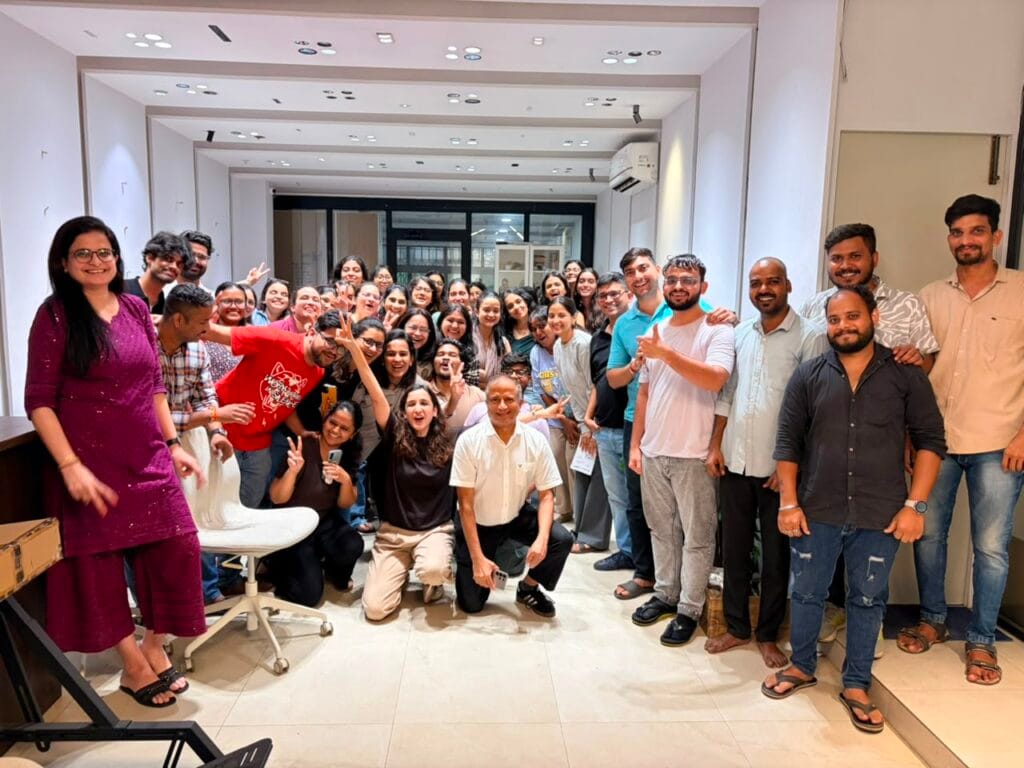
Our R&D team is probably the most hardworking team at Aminu because getting an ingredient to “work” is actually the easy part. The difficult part is getting twenty things to work together, remain stable, reach where they need to, feel beautiful enough to be used every day, and still respect what the skin is already trying to do for itself. So yes, I would always rather be late to the shelf and early to what skin needs now and will need next. I think our repeat rate is simply the commercial consequence of that patience.
2. You travel internationally to learn and bring that knowledge back to Aminu. What’s the biggest lesson from outside India that’s shaped how you build here?
When I travel, I am far more excited by what happens before an ingredient becomes famous. Meeting the lab working on a molecule barely anyone has heard of, the delivery-system company figuring out how to get it to the right place in skin, the scientist who has spent ten years understanding one biological pathway, or even the mine owner of a rare clay and understanding why that particular geography changes its mineral composition.
That proximity changed how I wanted to build Aminu. I don’t want the world to tell us what the next big ingredient is and then formulate around it, because what is exciting or relevant for skin somewhere else may not necessarily solve what skin here is asking for. I want to be close enough to the source to start with the problem, not the trend. Then we can ask: what does Indian skin living through our heat, humidity, pollution, pigmentation tendencies, air-conditioning, stress and lifestyles actually need, and what science from anywhere in the world can help us build for that?

And strangely, travelling has made me more ambitious about India, not less. The countries we think of as beauty capitals didn’t become powerful only because they built great brands. They built the laboratories, suppliers, specialist knowledge and intellectual property underneath those brands.
India is already becoming one of the world’s biggest consumers of beauty. The real opportunity is to become one of the places the world comes to learn beauty. That is the India I want Aminu to help build.
3. What does a day in your life actually look like — from the moment you wake up to how you unwind at night?
My days move very quickly between completely different worlds, and there is almost no clean separation between science, creative and business anymore. I can start the morning discussing ceramides, move into designing a campaign, then spend the afternoon obsessing over why a tube is dispensing 0.2 grams too much, look at CPMs, read what customers are saying about how a formula is actually behaving on their skin, and somehow end up in a five-year business conversation. I’ve realised founders don’t really have a job description, you just keep moving between whatever needs your brain most that day. Most evenings I cook, which is probably the one thing that forces me to slow down a little, and then comes my favourite part of the day: I read a ridiculous number of research papers at night. That is usually when one random line sends me down a completely new rabbit hole.

4. You’ve spoken about losing your father while still in school, and how quickly life changed after. How has that experience shaped the way you approach risk and resilience today?
Losing papa at a young age taught me: certainty is much more imaginary than we think. So I don’t optimise my life for avoiding failure; I optimise it for not wasting the years I have being afraid of it. Resilience, for me, isn’t becoming harder. It is being able to absorb a difficult reality without allowing it to shrink your imagination.
5. You’re known for supporting other founders generously, often before you have anything to gain from it. Why does that matter so much to you?
Yes, I share a lot. If I spent three years learning something the hard way and I can save another founder a year, why wouldn’t I? India’s beauty market is becoming too large, too diverse and too interesting for one or two companies to own the opportunity anyway. We need hundreds of excellent companies solving different problems for different people. So someone else building something brilliant does not reduce the size of Aminu.
And, travelling made this even more obvious to me. Nobody goes to Seoul and talks about one Korean brand, they talk about K-beauty. France has built a reputation around formulation and laboratories. China around manufacturing capability. Even something as niche as Nordic mud becomes valuable because an entire geography has built credibility around a certain kind of expertise. Countries become categories when enough good companies reinforce the same belief.

So if I genuinely want Aminu to become a global brand, I also have to care about India becoming a globally respected beauty ecosystem. One exceptional Indian company can still be treated as an anomaly. Twenty exceptional Indian companies start changing the world’s mental model of what India can build. I don’t think the great Indian beauty company gets built by defeating every other Indian beauty company. I think we really win when being Indian itself starts adding credibility to the product. When somewhere in Paris or Seoul, someone says, “You need to see what is coming out of India.”
6. In one line, how would you explain Aminu to someone hearing about it for the first time?
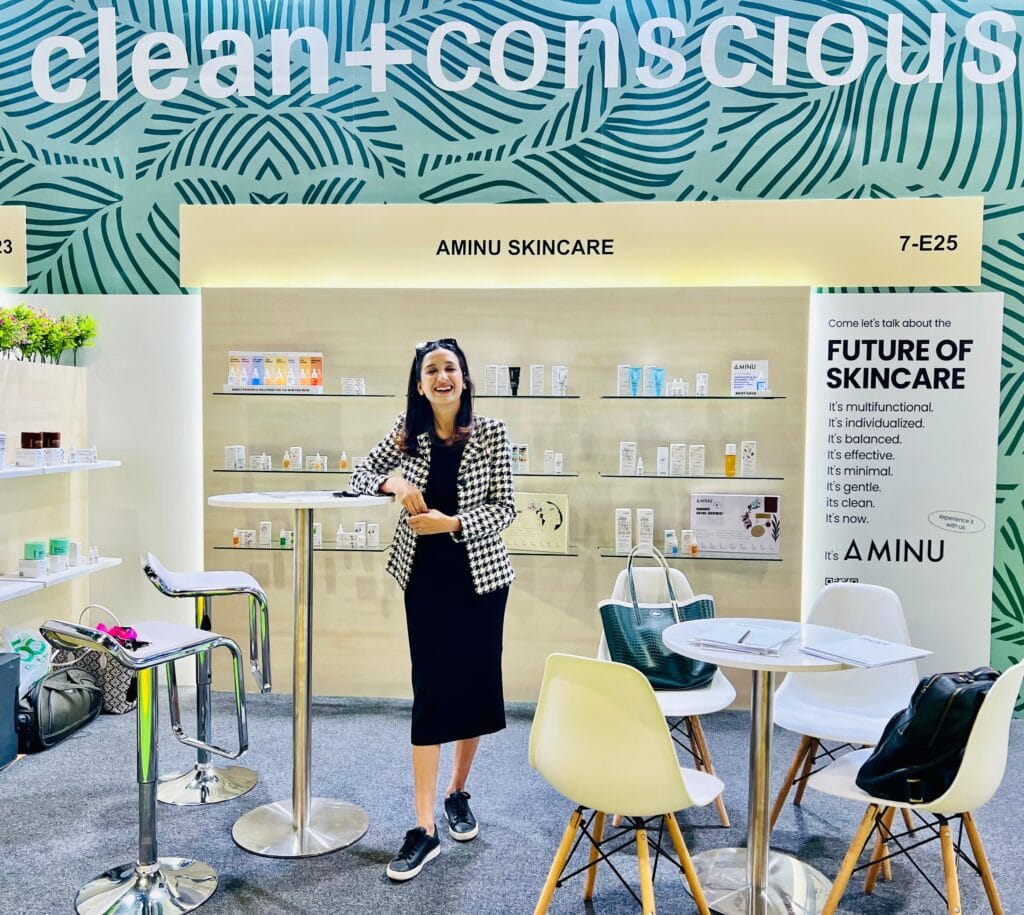
Aminu is a skin-intelligence company that studies how skin behaves in real life, then builds deeply researched formulas to help it function healthier, stronger and happier for longer.
7. What does “Beauty Inside Out” — Lavenderoom’s own philosophy — mean to you, as someone building a brand so rooted in discipline and care?

To me, beauty inside out means that what eventually becomes visible is usually the consequence of something invisible being cared for consistently. Skin is like that, but so are companies and people. The surface eventually reveals the quality of the system underneath it. That is why I’ve always been more interested in building the inside correctly than making the outside look successful quickly.
8. On the days you’ve doubted yourself in business, what’s the one thing you come back to?
I separate “this is difficult” from “this is wrong.” They feel surprisingly similar when you are inside a company. A bad month, failed formulation, delayed launch or difficult decision can make you question the entire thesis, when sometimes it is simply the price of solving something difficult. I go back to the evidence: repeat customers, treatment-room observations, product empties, results, and whether the original problem we started solving still exists. Usually the data is much calmer than my brain.
9. Five years from now, how would you like to be remembered — by your customers, your team, or the industry?
I would love for the simplest answer to be: we made a lot of skin healthier, and a lot of people happier in their skin. Because after all the science, patents, ingredients, growth numbers and whatever Aminu may become, that is still the unit of impact that matters most to me. Did someone’s skin become calmer, stronger, healthier? Did they understand it a little better and fight with it a little less?

I think beauty has spent decades giving people new things to dislike about themselves. If Aminu can leave behind healthy, happy skin, and a much kinder relationship with the face you live in. That would be a pretty good legacy.
Read More:
Skincare as a Relationship: Learning to Listen Before You Correct
7 Women I Admire and Here’s Why
5 New Global Skincare Ingredients to Look Out For